
Richard Kramer Interview: audio and transcript
Thirty Something writer, producer and his novel These Things Happen

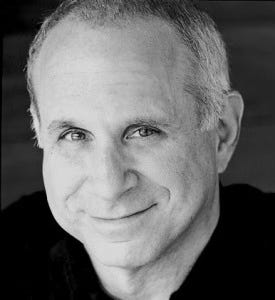

Mary Tabor author most recently of the novel WHO BY FIRE: My guest today is the longtime producer and television writer of such storied TV series as Thirty Something and My So-Called Life. Thirty Something changed television drama for the better with its emotional intensity about the quotidian lives of not so ordinary folk. After four seasons, 22 Emmy nominations and a bunch of awards and controversy, the show ended but is not forgotten. Folks are still watching it via DVD, via Amazon. Thirty Somethingwas praised for its writing, producing, and acting and criticized for the so-called triteness of the couple’s real-life problems. Kramer followed that show with My So-Called Life that arguably launched the career of Claire Danes, with only one season that developed a cult following. Slant Magazine called it the best teen drama of all time. Get that! Richard Kramer could name names in Hollywood. Who he’s known and lunched with and written lines for, and we might wonder if he has as much trouble with the paparazzi as the stars as he’s come to know.
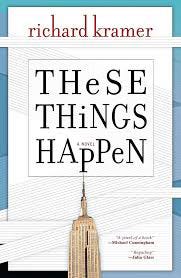
But in fact, realism not glamour has been the name of Kramer’s game. He proved that long ago in his short story “Late Bloomers” that appeared in the 1974 New Yorker when Kramer was barely out of bloomers and Yale University, believing in the “never too late” adage, at age 60, he wrote a novel. These Things Happen that Kramer adapted for an HBO series produced by none other than Oprah Winfrey. I, for one, can’t wait because These Things Happen is a sweet-hearted book that turns on its epigraph by E.E. Cummings. “Always the beautiful answer who asks a more beautiful question.” Let’s hope I do that line some service in the questions I pose. Welcome, Richard Kramer.
Richard: Oh, thank you, Mary. It’s wonderful to be here. And thank you for that setup. My God.
Mary: You got a big fan here, and you know how I’d like to begin? I’d like to begin at the beginning in a way. And talk a little bit about your short story that appeared in The New Yorker, and I’m going to give a little more setup for you here. It appeared in 1974, but I want to talk about this because of its voice and also to begin our conversation about the writing life so that our listeners can hear your early voice. For this reason, it reverberates in your much later novel. Here’s the short story’s opening. Here’s what Richard Kramer wrote when he was so young: “When I went back to college this year, I rode the same Sunday afternoon train from Grand Central that it carried me so many times before in New Haven, where the terminal as usual seemed to have just suffered another one of its successive condemnations. This time my train seemed to be full of preppies and college freshmen going up for their first fall term. I noticed, however, that they seemed to be able to make that first trip on their own, which was certainly not the case with me when I was starting out. But now I was a senior, salty and hard, and I chose a seat next to one of the few on broken windows and place my suitcase and my tennis racket on the seat next to me so I could be alone.”
Some considerable praise for that opening.
Richard: Oh, Thank you.
Mary: You’re welcome. It’s detailed, it’s revealing. It’s in the voice of a young person, a voice I hear in These Things Happen. Talk about what voice means to you both as a TV writer and now as a novelist.
Richard: Wow. First of all, I don’t think I’ve read that or heard those words or thought about them basically since it was published, so I wish I could write like that today. I remember very vividly who gave birth to my voice. That was written for a fiction seminar when I was a senior and was for a man who became a famous editor named Gordon Lish, who-
Mary: Oh, I know who he is. Yeah, Raymond Carver.
Richard: And this was before Raymond Carver, and he was a notoriously tough, mean guy who only said nice things to the pretty girls in the class. There were plenty of them. And well, he took this story apart, and I was very defeated from that, and I got it into The New Yorker. This is a roundabout answer to the voice question. But by sending it in a package of about ten other things that I had written for the school newspaper, hoping to get a job either as a fact-checker or as a “Talk of the Town” reporter.
Mary: And somehow you get to Williams Shawn’s desk?
Richard: It wound up on William Shawn’s desk via John Updike.
Mary: Really?
Richard: Yes. Who read, who just obviously couldn’t stay busy enough. He was writing nine novels a year at that point and read things that came in that they thought might be promising.
Mary: It doesn’t surprise me now that you told me this because when I read the story, and you have to be a subscriber in order to get into the archives, and I’m a really good researcher. I found it and I read it. It reminds me of his story, “Flight,” which was in Pigeon Feathers. There’s a way in which-
Richard: Pigeon Feathers was a big influence on this. Very good, Mary.
Mary: He recognized himself inside this writing. He could see that the level of detail in that there’s a mature voice here.
Richard: I know that there were really two key books, and both of these authors figure into certain life choices that I made. One was Updike, who found this, gave it to Shawn, and Shawn, who was the legendary, nutty, whispering editor of The New Yorker for many, many years, called me on my 21st birthday. And I remember my little heavy black phone in my room in Silliman College at Yale, and I thought he was kidding. It was one those things. And he said, “Well, I’m terribly sorry. We cannot offer you a job, but would you at all consider us publishing your story that was in your package?”
Mary: And you just said, no, of course not, I can’t do that. (Mary chuckles)
Richard: I think it was very interesting because the same day I had won the Yale Fiction Prize for that story. And the thing was that they would not give it to me if I published someplace else first.
Mary: Really?
Richard: Yes. So, I had to make my first difficult choice, which I just chose to go with the New Yorker. And the person who was giving the Yale Fiction Prize was somebody who I will not mention by name, but who went on to become a very famous writer. And he was very, very, very angry at me. And I think, well-
Mary: No I really want to know his name. Is he still alive?
Mary: Very much so. But I’ll tell you privately. I don’t think it’s fair.
Mary: He carved out Raymond Carver. There’s been a lot of stories in The New York Times about the actual editing that occurred to Carver’s actual more lyrical voice.
Richard: He had a big influence on American fiction of a certain period, which I would say would be really through the seventies, maybe into the beginning of the eighties. And he was a real heavyweight and that didn’t work out well. But Updike read it and gave it to Shawn, and he said to Shawn. I met him afterwards and he said to Shawn, “I think we should encourage this guy.” So, his incredibly wonderful collection, which was called Pigeon Feathers, which was I think his first short story collection.
Mary: I think so. He was so young when he published it. It’s remarkable. Those stories that are in that collection.
Richard: They’re beautiful and they’re timeless. And they were all New Yorker stories and it’s a classic volume. And then there was another book that my parents had. It was a paperback by John Cheever of the House Breaker of Shady Hill, who was called-
Mary: Oh, gosh, I love Cheever’s work.
Richard: And that is an amazing story. It’s about a guy who has a breakdown and starts to steal from his neighbors.
Mary: Then there was “The Swimmer.” Did you remember that one?
Richard: Absolutely. I think it’s in that book actually.
Mary: Yes. It’s in that early collection.
Richard: That was another writer who I read and read and read and read, who had this voice, a very detailed voice. And he was the one, I had lunch with him. I sent him the story, and he called me up and we had lunch. We met in New York, and he was the one who discouraged me from pursuing a career as a short story writer. Because he felt that the day of the short story was over.
Mary: And do you think that’s true now? What do you think now?
Richard: That was in 1974. Yeah.
Mary: I don’t think it’s true. Do you think it’s true now? Because some people are saying it now.
Richard: I don’t. I Don’t read them the way that I used to. I used to be obsessed with them. And I think you stop being obsessed when you start losing people to have conversations about them with.
Mary: That might be, that’s why I teach so that I can have that conversation and often for free. Gee, I just announced that on a very large audience radio show. We’ll see what happens. But anyway, can you come back to the question of voice? Have you thought about voice? And because I think you have a really distinctive voice, and I’d like to talk about it in terms of TV versus the novel, because we know that in TV you have to work with a lot of other people.
Richard: With TV, I was incredibly lucky because I was working with people who I already knew as good friends, and we had just wound up in Los Angeles at the same time in our early twenties together and had become friends then.
Mary: Would that be Zwick? And Herskovitz?
Richard: Yes. I’ve known them now for more than 40 years
Mary: For our listeners: This is Edward Zwick and Marshall Herskovitz, who were the creators of Thirty Something and have gone on to do many other things as well.
Richard: And they were so aware of what I could do well, that they encouraged me. I remember the first script that I wrote, which was the third script of the first season. And they said, “This is not good.” And I said, “Why?” They said, “Because you sound like us and we want you to sound like you.”
Mary: I love them.
Richard: I love them too. And from that point on, they just said, “It has to sound like you even if we don’t like it, as long as it sounds like you the show will be good.” And this was a piece of advice that they gave to everybody. But I was never asked to temper the authenticity of my voice for another form. And they encouraged it and brought it in. And I think if it had been more brutal, for example, if they had said, “Oh no, you can’t do this and you have to sound like us.” I might never have written this book.
Mary: Have they been supporters of the book? I’ve done a little searching around. I know at least one of them held a party for you. I think so.
Richard: He did. Well, I thanked them very profusely in the acknowledgements. And the book is also dedicated to Ed, who for 37 years, every single day would call me and said, “Why aren’t you writing a novel?” Yes. Because he’d read the story that I published when I was in college.
Mary: He, like me, had read that story pretty closely and could see that you could do this.
Richard: Oh, absolutely. And he just kept saying, I want you to write a novel. I want you to write a novel. And I know that I would not have done it without that voice buzzing in my ear all the time.
Mary: I’m going to get to the novel in a lot of detail. I want to you to know that because we want people to buy it, and we want people to watch the HBO show whenever it comes on. But I want to talk about something that you’re doing in this particular short story that you may not even realize that you’ve done, but that I have done a lot of close looking at it. There’s an unusual narrative stance that, which is what reminded me of Updike’s “Flight”. It’s that you frame the story with an older narrator’s voice, and yet the story revolves on the first-person narrator, Stui, years before college, and particularly the summer before his first year ends when all of this was a long time ago. Now, that’s a really interesting thing to do because what it results in is a lot of interior work. And that’s something that I saw in Thirty Something for the first time on television, interior work, in script. How did you get away with that?
Richard: We couldn’t get away with it now. And we knew we were getting away with it at the time. And all of us, everybody who was worked on the show, stayed on the show for the entire time. And now it’s very popular for people to leave after a year of a success and go on to make more money or to do other things. But every one of us knew at that point that the opportunity that we had was not going to return where we were getting away basically with murder. And this was a very, very different time in television history. The networks were still in charge of everything. And-
Mary: Yeah, we’re talking here for our listeners: This is 1987 to 1991.
Richard: Yeah, that’s a long time ago. A college classmate of mine went on to become the head of HBO Time Warner, and at the time jumped onto HBO when it was just, when it was a month old. And I remember everybody saying, “What is HBO? What does that mean? What is cable television?” But there was none of what’s available now, and that what we got away with is a miracle. We could not get away with it today because interference is everything. We had no interference at all. And that was because Ed and Marshall had a great attitude, which is, they just said, “If you don’t like it our way, we won’t do it.”
Mary: Once you got into some trouble with the episode that I love the most, actually, it’s called “Strangers.” And it gave Melanie Mayron a really strong role in which she did some really unusual interior work. And you did get into some controversy with that one where they did some stuff to you. I don’t know if you want to talk about that or not.
Richard: I do, actually, because there was no trouble in the creation of it. The trouble came so long after we had all done it that you’re already onto nine other things, so you don’t even notice it when you’re in the middle of a show.
Mary: Can you tell our listeners what the trouble was? And then we’ll talk about this because it leads us somewhat into the book.
Richard: It does, actually. It does, actually. We felt that these characters on Thirty Something would have at least one gay friend. We never managed to have them have a black friend. And we tried, but that they would have at least one gay friend. And Zwick said to me, “So write something.” So I did, and I went off and I wrote a scene before there was a script, and we cast it on the basis of a scene. It was a very long scene, and it showed two characters, two male characters post-coitally, which had never been shown on television.
Mary: Now everyone that’s listening needs to understand that you don’t see anything. There is nothing going on. Okay, they’re just in bed. That’s it.
Richard: But you understand that sex has just been had. They’re not watching television or eating ice cream. And it’s implied that these two people had been sexual with each other and that they had enjoyed it. And that matter of factness, which was a matter of factness that we tried to give to every situation on the show was what apparently, because it didn’t upset me, but apparently upset certain rigorously organized pressure groups who are still in existence today, many of whom had never even seen the show, but they simply had been told react negatively to this, to punish the people who made it. Well, we never got punished. The network never said anything about it.
Mary: The other thing I want to make a point here about is it is a really small part of the show. Most of the show and the interior work is about Melanie Mayron’s character.
Richard: It’s completely about her.
Mary: Melanie Mayron’s character’s relationship with a younger man, and all the interior work that’s done is about her. So, it’s amazing that that happened in 1977 or in what year? I think that was 90. I think it was in the third season.
Richard: I think so, yeah.
Mary: I think it was the third season. So, this brings me to the book These Things Happen, which I want you to talk about because like your short story and These Things Happen, both deal with a young man and some struggles with his father. There’s no heavy-handed drama. But as you say in the short story, “The indoor part of a perfect life has always been clear to me because I have radar for the ordinary.” Talk about this novel for our listeners so they know what you’ve done here, and give us some, some indication of what’s going to happen with HBO.
Richard: This novel is a family story set today in Manhattan about very, very advanced, sophisticated people who consider themselves liberal on every conceivable subject and have secrets from themselves about how they really feel that come out when an incident happens that causes them to be revealed. That’s an overview of it. And it’s about what happens when a 15-year-old boy asks if he can move in with his father, who has come out after his parents’ divorce. And his father’s male partner, who he barely knows.
Mary: We’re talking about Wesley, and we’re talking about George and Kenny, who are the couple.
Richard: Kenny is the father. Kenny is named Kenny for Ken Olin, who, whom he is nothing like but was always who I visualized.
Mary: Who was a major star in Thirty Something.
Richard: He was Michael on Thirty Something. No, he’s not gay, but he is who I visualized because I wrote for him so much. I was so used to it.
Mary: It’s a wonderful sweet-hearted book. And one of the things I say about it. George is an older gay man, and Wesley is a young high school boy, and these two are heart-warmers in this novel. And there’s just no question that you will find this book touching and moving in many ways, clearly written from a meaningful place I suspect in your life, Richard.
Richard: It is. Listen, I’ve read your book WHO BY FIRE, and I’ve had the pleasure of just finishing it recently, so I’m very fresh on it. It is and it isn’t, as you know. There’s certain things that are very autobiographical that nobody would ever guess are about me. And the story in the book did not happen to me, but it could have.
My heroes are the people who don’t think that they’re heroes or know that they’re heroes. And it’s so interesting to me that you quoted that little bit from “Late Bloomers” where I described a radar for the ordinary.
Mary: And I know exactly what you mean, and I want to ask you another question about this, because George comes off as a real hero to me in this novel. And he’s just a really a regular sensitive guy who does something extraordinary. And I’m not going to tip that to anybody. But I think as you know from having read my book, that I have a deep interest in heroes, not the ones who are movie stars or astronauts, but ordinary folk like George, who asked a beautiful question.
Mary: Richard, who are your heroes?
Richard: Oh my God, my heroes are the people who don’t think that they’re heroes or know that they’re heroes. And it’s so interesting to me that you quoted that little bit from “Late Bloomers” where I described a radar for the ordinary.
Mary: I love that line. It’s a great line.
Richard: I think in some way I’ve lived that in a little bit and created in this guy an ordinary guy who, if you didn’t look twice, you might not think was heroic at all. And he is in a world of people who are self-consciously heroic. But for me, the heroic person is the one who has no self-consciousness whatsoever about who he is and what he does in the world, and just simply does it. And don’t you think that’s who George is?
Mary: Oh, absolutely. I think you bring that off with George incredibly well. And because he’s highly self-deprecating, extremely cautious. Really, he’s a considerate and careful person, which I think is a rare thing in this world in itself.
Richard: It is. And the one other thing about the story I wanted to say is that the kid moves in with the father and the boyfriend hoping to get to know the father. And the father turns out to be a bit of an ice cube and very distant and uncomfortable with the kid. But George, who never expected to have this relationship with this boy, and the boy bond immediately because George is completely authentic. And this boy is in search of the authentic in his life, the way many teenagers are, the way many grownups are. But has the ability to see in this man who is not rated as highly as the other fancy people in his life, the real hero and his connection to George makes these very, very liberal people, very uncomfortable.
Mary: Do you, you know, a lot of people like this? You are in what we call La La Land. You’re in LA I’ve lived in DC where we’ve got our own problems with who values themselves in one way or another on K Street. Do you have some trouble with that in the LA environment?
Richard: Absolutely. And what makes it more difficult is that the people who hold these views don’t know that they hold them. Because it would go— We’re talking really about homophobia here.
Mary: Yeah, sure, we should name it for what it is.
Richard: Name it as “homophobia.” But it really is fear. Well, I could do two hours on this, Mary, maybe we could do that privately. But if you are someone who congratulates him or herself on their tolerance and broadness of you, it’s really difficult for you to see that you might share certain beliefs that the culture has been pounding into your head for a thousand years.
Mary: And in fact, not even realize it. And not even understand it.
Richard: And not even realize it. So, we’re not talking about mustache twirling villains. We’re talking about essentially good people who the action of this book forces to know themselves better than they would have otherwise. And they find things in themselves that they don’t necessarily like.
Mary: I’ve often said to my children that we are held together through a delicate thread of civility. And that’s what gets forgotten, I think, is that delicate thread and how easy it is to break it. It’s really easy to break it.
Richard: How easy to snip it. Yeah. And that’s what happens in this book is the kid through his inability to be anything other than authentic snips that thread.
Mary: I want to ask you a couple of questions about TV since you’re about to go into an HBO series. I did assert in the intro that Ed Zwick and Marshall Herskovitz opened the way for the depth we found in shows that followed it briefly. For me, that would include Northern Exposure, which was 1990 to 1995, and then more solidly on cable, The Sopranos, I think, was one of the greatest shows ever to have been made. And I also love a show, In Treatment, that’s not on now, but Melanie Mayron, who I hope you’re still in contact with her. She directed one of the episodes. What do you anticipate happening to you with cable now?
Richard: First of all, Melanie is going to do the audible version of this book.
Mary: Oh, that’s fabulous.
Richard: Which is also wonderful because I wrote so much for her.
Mary: How did I know to pick her out of all this? I don’t know.
Richard: She and I were really connected on that show. I wrote almost everything that she did, and we were lucky to bump into each other because we got each other so well.
Mary: Yeah, I bet.
Richard: Yeah, she was a funny, smart Jewish girl from Philadelphia. Ironic, self-deprecating. Actually, she was sort of the George of Thirty Something. She was the one who was secretly more together than any of them.
Mary: I loved her the most on the show. I really have to say that in deference to all the others who were all wonderful too. I really just loved her.
Richard: And she knew that she was not a loser. She played it very subtly. She came to me while we were doing the pilot. She said, “Help me.” She said, “Because it would be so easy for me to be a Rhoda.”
Mary: I didn’t see that. I never saw that.
Richard: And I said, “Melanie, I’ll help you.” And we had an incredibly fun time doing it. And I had that with all the actors, but especially with her and with Kenny Olin, they were just such, you know, it was fated for us to come together at that moment because we so understood each other.
Mary: Yeah. Well, but here’s a question that might be tough, and if you want to hedge it, you can. His connection has been really, really important to you. Clearly you have this extraordinary connection with Ed Zwick and Marshall Herskovitz, and they’ve both gone on to do some wonderful stuff, including, one of them did the movie Defiance, which I think is one of the best things I’ve seen in film in a long, long time. So, when work begins with Oprah Winfrey as producer for the new series, are you going to have some trouble not working with your friends here? Or is it going to feel different, or do you know yet?
Richard: I’ve turned in the first draft of the script, which is nice. I’m now doing the second one. And I was really impressed with her people. They are terrific. And I always miss working with Ed and Marshall because they understood me so well. They would just have to raise an eyebrow, and I would know what their note was. So, we had a shorthand and a language that took 40 years to develop. And they will always be the people I go to first to show anything that I’ve done, because their response is still the one that is the most interesting to me.
Mary: So, one of the things you’re going to be doing here is you’re going to be moving from the solitude of writing a novel. And in the Nobel Lecture, Camilo José Cela in 1989, his Nobel lecture said, “I write from solitude and I speak from solitude. That’s where I write from.”
Richard: What else can you do? It is, and I love it when I’m doing it because it’s sort of like being in a city room in a newspaper. I thought before I did it before I started really doing it when I was about 30, but I thought, “Oh, I can never deal with all the distraction.” I love the distraction. And somehow when you’re distracted, it makes it easier to concentrate because you’re fighting against something.
Mary: So, are they going to fool with this text a lot as this gets made into a series?
Richard: They hired me to do the adaptation.
Mary: That’s the good news.
Richard: That’s the very good news. And it came out of the blue. They found it on their own. It was not even submitted to them. Their reader read it and then just gave it to everybody. And everybody said, Let’s bring him in. And I wrote the book to get out of television. I wrote a book because I wanted to put things in a different movement as I turned 60. And the funny thing is that it’s come back in this way, but this HBO is a great place to do it because they let you say bad words—
Mary: That’s true. And as a late-bloomer—
Richard: And be more emotionally—
Mary: As a late-bloomer myself, I understand all this. I think you know that from reading my book.
Richard: Your book is a real HBO book because it’s about people who are not always sympathetic.
Mary: That’s true.
Richard: And who are not always admirable.
Mary: That’s also so.
Richard: But who are real.
Mary: That’s great publicity. I thank you for that.
Richard: And that’s the thing that cable networks have utterly changed, is that they have turned from likable, sympathetic people to desperately unlikeable, unsympathetic people for their heroes. And that is a huge change in the paradigm. You talk about heroes. I’ve watched Breaking Bad. That couldn’t have been possible when we were doing Thirty Something in a million years. And he hasn’t got a single quality that any network executive would approve. And yet he’s incredibly real.
Mary: Real and there’s also a lot of goodness and forgiveness in my book too. So I mean, yeah, I’m hoping that you saw that too.
Richard: Oh, absolutely. But your people are people. There’re certain things that are stronger than their resistance. So they’re complex.
Mary: Oh, that’s a great insight.
Richard: And that’s what I love finding in things. And I think that the people in my book are much nicer than the people in your book. And one of the things that worries me a little bit about, as a writer now as I can call myself an author, is I hope that I have the, whatever it is, to write about people who are really horrible. That’s what I’d like to do next, that are not appealing. That’s my next challenge.
Mary: I can’t say that I’ve ever done that or that I’m ever going to go down that road because I don’t think I could do that. But it’s kinda scary that that’s what sells, and I am also dealing with the ordinariness of life. So, I think that’s why you and I connect so well and why you connected to the book. I do believe that.
Richard: One of the things I think that the books have in common is that they are in some way a private list of the things that we love put into a dramatic situation.
Mary: I think that’s a great way to describe it. I really do.
Richard: To have the chance to be able to do something like that is really a pleasure. Because for me, as I was writing it, these things kept appearing to me that I’d loved all my life and wanted to be in the book. And I didn’t sit down consciously at the beginning saying, “Oh, I’m going to mention this and refer to this and show this.” It just started to come and it became a conversation between me and a friend about things that I love. You understand?
Mary: I do. And I think that also when we write, we move into the solitary mode, and we begin to see how the fragments of life can actually form love. And I think that’s both of our subjects. The subject is primarily love.
Richard: This is true.
Mary: I think that’s pretty important for both of us. As I bring this show to a close, I want to say this to you first, that your novel is about stepping into life and the discovery of one’s best true self. And I think mine is too, I hope it is.
Richard: It is, yeah, it’s very true.
Mary: And the ability to see that in others, which also I think is something that we share in what we’ve both done. And I want to thank you with these words from a poem by Emily Dickinson that I’m going to make a pretty risky guess that you’ll like as much as I do. And this is just one stanza, and here it is. You could tell me what you think. “I dwell in possibility of fairer house than prose. More numerous of windows superior for doors.”
Richard: Oh my God, that’s so beautiful and so mysterious.
Mary: And all the hope is there. Richard Kramer, thank you for the honor of this conversation, for reading my book. And oh, my pleasure. I have to say this from your mouth to God’s ears about an HBO show and for connecting, mostly for connecting here with me and for the future connection. Thank you, Richard.
Richard: Thank you, Mary.
Love,
I really enjoyed this, Mary. Thank you.
The lovely connection between you and Richard is so evident.
I had never heard of ‘Thirty Something’ but have added Richard’s book to my list .
I too, love John Cheever’s work and have that collection of his wonderful stories. Read over and over!
Also …….. your book has now arrived into my hands so I am very much looking forward to diving into that this weekend !
Dearest Mary, although I have heard of "Thirty Something" I don't recall ever living anywhere at a time when the show was aired—now of course we have all sorts of options to remedy such things—regardless, this conversation with the Richard Kramer is fascinating, your introduction drew me into the conversation with both interest and ease... as Maureen said below, it felt like I was sitting their with you; the student in awe and learning!
Thank you so much for sharing this with us.