

“In Search of a Sleeve-Board” essay published first in IMAGE, special section on the artist and the community. Nominated for Pushcart Prize: Best of the Small Presses. Another version appeared on Inner Life that is on pause …
As I prepare for the release of my novel Who By Fire by Empress Editions via Alisa Kennedy Jones and Hachette, I am struck by my search for community. Today would’ve been my sister’s birthday; she died at age 53, and, in a large sense, this is for her in memory and my love for her and for how much she encouraged my writing as her dying wish.
In Search of a Sleeve-Board
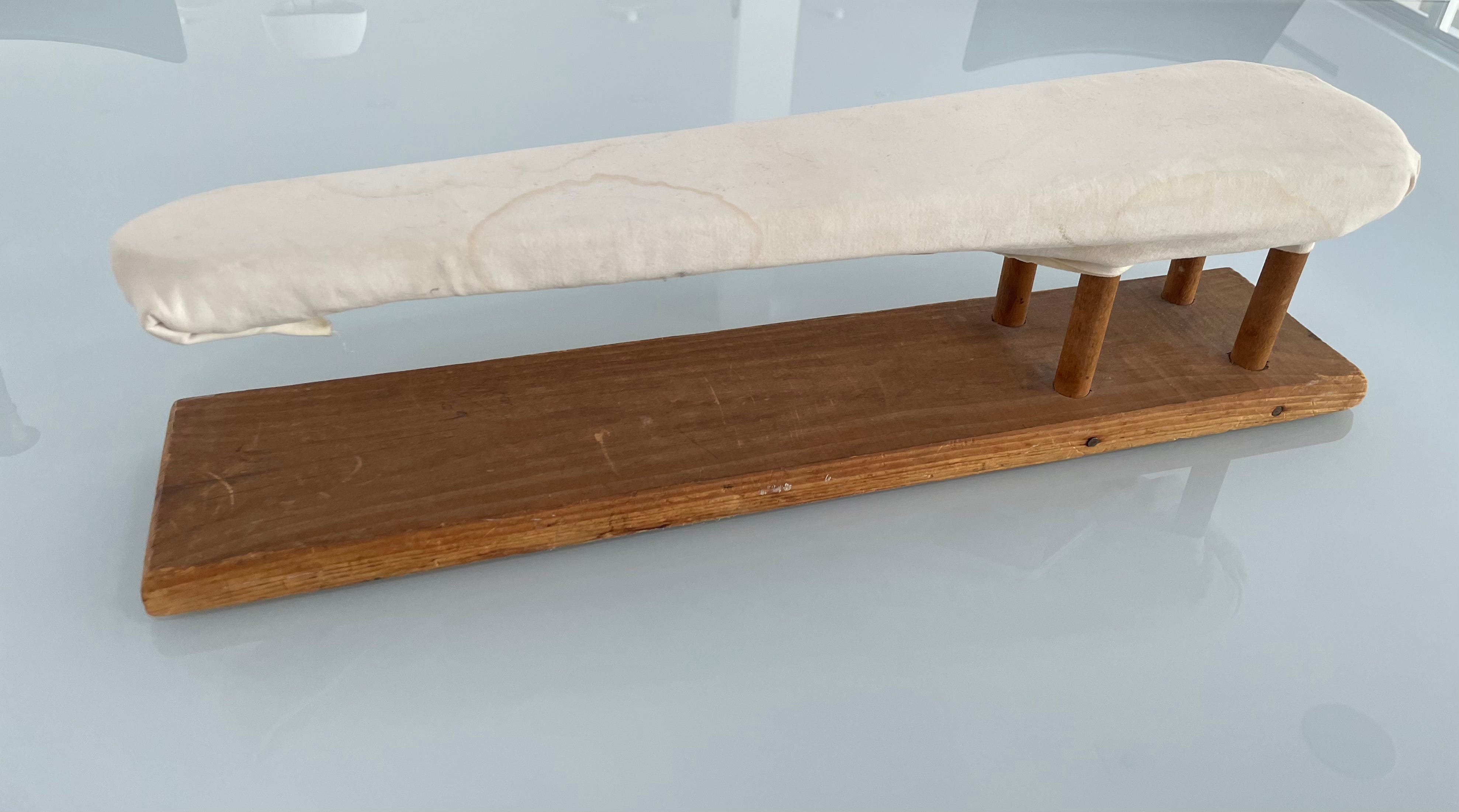
I searched in a yellow wood armoire and then a bureau for the small ironing board that was my mother’s, a sleeve-board that my mother used when she sewed. She had had it so long she’d had to re-cover it with a new piece of cloth that dulled with years of pressing seams and basted cuffs. I begin here, a dream actually, about the search for the sleeve-board because the sleeve-board—my mother’s sewing, the dress she made for my last day of third grade, a rosy pink eyelet frock that is now darkened with age to dusty coral and that my daughter didn’t want to wear when it would have fit her—is not within reach. In the dream of the sleeve-board lies an indescribable silence.
In this silence is the writing. In the writing is the longing for and, I fear, estrangement from community.
When my mother died, the word absence became palpable and unbearable. I am ashamed to admit that I was unable to participate effectively in the act of community that follows the death of a Jew—the shiva, when family and friends come to support the mourners. I attended every shiva but was unable to have the conversations that were incumbent upon me. I escaped to a stoop outside the house. I violated the requirement that I not go out of the house until the seven days of mourning had been lived.
In the silence that followed her death, her absence, I have written stories that ineffably recall her even though I have not written stories about her.
I remember her kitchen, the blue-white water mixed from powdered milk she poured inside a Sealtest jar and placed inside the fridge. Her faded housecoat, her rolled down stockings, the piece of floss she crumpled in a tissue in her pocket, the shuffle of her feet in cotton slippers on the kitchen floor, my arms around her knees, blue-flowered cotton in my face, the smell of garlic on her skin. The afghan that she’d knitted and that lay at the end of my bed when I was little. The night before she died, the hospital room. Then after. Going home. The gray afghan I crawled under for the lasting feel of her in weight of wool she’d threaded with blue chevrons while I’d lain blue-pale inside her womb.
The inadequacy of these words in the face of my memory of her is striking. Thus, I’ve come to understand, ashamed as I am, my inability to engage fully in the shiva, to my mind one of the most generous traditions of community in Judaism. I could not bear the conversations that seemed, however kindly, to take a measure of her life.
And yet, that life, as I saw it, appears in the writing.
I could not bear the platters of cold cuts, brisket sandwiches, bowls of strawberries in January, store-bought rugalach, an imitation of her signature pastry that recalled her and defined her absence. People and food seemed to smother her disappearance in presence.
The night before my mother died she said, “358-1965,” the phone number for the apartment where she had lived with my father before they moved in with my sister, after my mother’s stroke. Her phone number and the pressure of her strong hand, determined to finish the work. This hand I’d known when she fitted the filmy tissue-paper pattern on me for the dress I wore to the third-grade party. One firm hand laid the paper on my naked shoulders, the other lay beneath to protect my skin from the pins. To ensure the fit, she pressed the flat of her palms on my shoulders. These same strong hands had pinned, basted and re-basted my wedding dress that was borrowed from a cousin, that had fit but that to my mother’s dismay grew bigger as I grew thinner as the day of the wedding approached. That night in the hospital, she, who’d ensured that my clothes would fit, she, who seemed to me to create clarity with such acts, spoke to me in what I wish to see as code.
The writing strikes me as wishful code. It evokes “the eternal torment of our language, when its longing turns back toward what it always misses, through the necessity under which it labours of being a lack of what it would say. …[A]ll is limited to the exigency of a fervent wish …,” as Maurice Blanchot says in the Infinite Conversation.
My search for the sleeve-board, if you will, requires that I withdraw from the world, with a certain shame. When Ron-the-compliment-man asks me for spare change in Adams Morgan where I live (“Love the haircut,” he says, and I give my change), I see my own destitution in his because I do not give enough—certain shame like the stoop at the shiva. When my cousin Shirley, ten years younger than my mother, more sibling than niece—heavy breasts like my mother’s, barely five-feet tall like my mother, hands, nails pared close, curved in half-moons to grace the hand but not impinge on the task, so like my mother’s—took me to her, held me at the shiva, I knew the shame of unspeakable wish.
The writing does not replace the ethical obligation to community that the shiva honors. But it shares with community the fervent wish for presence.
Love,
Love scrolls the words forever printed on your soul . And sometimes printed on the most unexpected places.
Best of luck , Mary! My Dad was an incredible golfer, he had a fluid swing that rivaled a ballet movement. For years, when the ball left the tee, he would call after it, I can still hear him ; “Get wings baby, get wings!”
I’m smiling when I say, I send the call out for your novel on the day it will be released;
“Get wings baby…”
Oh Mary, this is so, so beautiful and moving. I can relate to what you are describing here. My relationship with my mother is unfortunately not as warm, but my mother's mother played a vital role in my life. When she died last year, her sister expected me to fly over to the funeral and hasn't forgiven me for not doing so. But my grandmother meant so much more to me than this polite ritual (a Catholic burial) that feels very preformative to me. Instead, I honour her every day in my writing and thinking about her.
On another note, I'm grateful that you are part of my community. Sending you much love